
1025 Montgomery Hwy
Ste. 200, Vestavia Hills, AL 35216
(205) 637-3055
Secure HIPAA-compliant
Mon - Fri: 8AM- 5PM
Online store always open
Ste. 200, Vestavia Hills, AL 35216
Secure HIPAA-compliant
Online store always open
What is treatment-resistant depression?
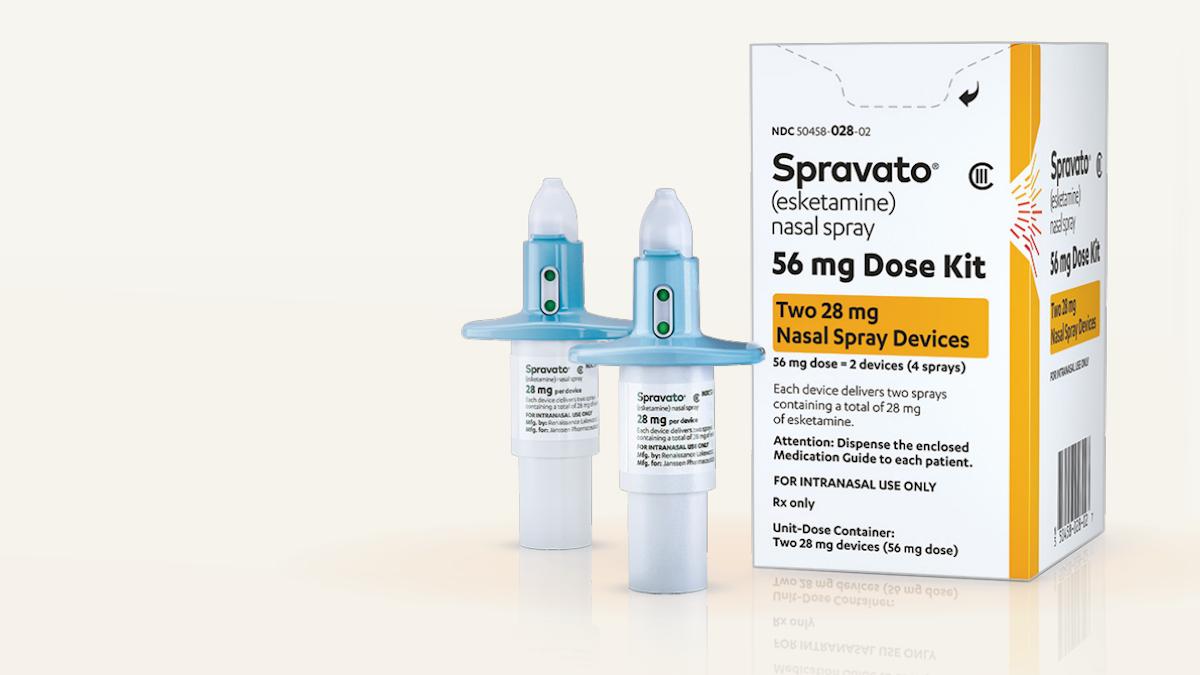
Spravato® is a nasal spray medication containing esketamine. Spravato® can reduce the symptoms of major depressive disorder even when other treatment approaches aren’t working.
It is FDA-approved for treating depression in adults who have not responded to two previous antidepressants. Many patients who take Spravato® see improvement in their symptoms within 24 hours, and some even improve within four hours of their first dose. At the present time, the safety and efficacy of Spravato® in children and adolescents has not been established. For this reason, this medication is authorized for use in adults only.
After being sprayed into the nostril, Spravato® is quickly absorbed through the nasal membrane, allowing Spravato® to enter the bloodstream and then the brain. Then the medication quickly works on brain chemicals that regulate mood.
Common symptoms of major depressive disorder include:
The US Food and Drug Administration approved Spravato® for adults (18 and over) who have treatment-resistant major depressive disorder and no contraindications to Spravato®.
Treatment-resistant depression is defined as depression that doesn’t improve after an adequate trial of two or more antidepressants. An adequate trial is defined as one in which:
Spravato® is contraindicated in patients with:
The first step is to contact Magnetic Hope for a brief screen to determine whether or not Spravato is safe for you and if we have any openings for new patients. The next step is to schedule an appointment with Dr. Richesin at Magnetic Hope, who will do an assessment and document any previous treatments you have tried for depression. She will discuss the risks, benefits, side effects and alternatives for treatment. We will ask you to gather pharmacy records verifying your medication history to satisfy insurance requirements for coverage of Spravato. We will help you register in the REMS program and contact your insurance company to determine your coverage for Spravato®. We expedite this as much as possible, but this process can take days to a couple of weeks.
Most people can take Spravato®. However, Spravato® is contraindicated in patients with certain medical conditions or with allergies to esketamine.
Because of the risk of sedation, dissociation and abuse/misuse, Spravato® is administered under a specific program called REMS (Risk Evaluation and Mitigation Strategies). Magnetic Hope is REMS certified.
Important requirements of the Spravato® REMS program include the following:
The healthcare setting, patient, and pharmacy all have to be registered in the REMS program in order to ensure that:
In the office, patients self-administer the Spravato® nasal spray under staff supervision. Then they relax in the treatment room for at least two hours while being closely monitored by Magnetic Hope staff.
Some patients bring a book, a relaxing music playlist, or a journal for use during the session. Many patients will sleep during the treatment.
After Spravato® administration, some patients will experience nausea and vomiting. Because of this, patients should avoid eating for at least two hours and drinking liquids for 30 minutes before their Spravato® treatment. Dr. Richesin will prescribe patients a medication to prevent nausea to take before their appointment. Patients who take a nasal corticosteroid or nasal decongestant medicine should take these medicines at least one hour before their Spravato® treatment. Patients should hold any diuretics/water pills till after treatment. Magnetic Hope staff will monitor each patient and discuss the medication effects, including both the beneficial aspects of Spravato® treatment and if there are any unpleasant side effects. Open and honest discussions with Magnetic Hope’s treatment team is an essential part of helping patients get better.
As is the case with every medication, Spravato® can cause people to experience certain side effects.
When a person takes Spravato®, potential side effects may include: sleepiness/sedation, dizziness, anxiety, nausea, vomiting, changes in blood pressure, dissociation, (in which the patient feels disconnected from time and space or from their feelings and thoughts), perceptual disturbances (time appearing to speed up or slow down; colors, and noises seem especially stimulating), and blurry vision. Those with a history of drug abuse or dependence may be at greater risk for abuse and misuse of Spravato®. Careful consideration is advised prior to treatment of patients with a history of substance use disorder, including alcohol. Monitoring for signs of abuse or dependence is recommended. Because of the potential severity of some of the risks noted above to cause potential morbidity or mortality, Spravato® in only administered under a REMS program and requires in-office administration for patient monitoring.
Two hours after Spravato administration, we will determine when a patient is safe to leave the office. At that time, the patient must have someone drive them home because of possible side effects which can affect mental alertness and motor coordination. In addition to driving, patients won’t be able to operate machinery or do anything which may require complete alertness until the day after a treatment session, following a restful night’s sleep.
Patients need to attend a series of sessions to get the most out of their treatment. Most patients continue Spravato® for at least six months and some patients continue in maintenance for years. A typical course of Spravato® treatment involves two sessions a week for the first month, then weekly for the second month. Thereafter, the sessions are typically once or twice a month or every six weeks.( Most patients need to attend these additional booster sessions to prevent relapse. The sessions may continue indefinitely.)
Most prescription antidepressants work by affecting the transmission of chemicals called neurotransmitters in the brain. These neurotransmitters, including serotonin, dopamine, and norepinephrine, are associated with positive sensations such as joy, motivation, and elevated energy levels.
However, Spravato® is thought to work on a different neurotransmitter, glutamate, at the NMDA receptor. Glutamate is an excitatory chemical involved in chemical messaging between cells in the central nervous system. Researchers believe that glutamate is a key element in learning, memory and mood. It is thought to increase neuroplasticity, meaning the ability of the brain to alter its structure, function and/or connections.
At Magnetic Hope, we understand that the cost of care is a source of concern for most people who are seeking mental health treatment. Insurance policies can be challenging to understand, and it can be difficult to determine which services are or are not covered.
The good news is that most insurance providers cover Spravato® treatment. Depending on your insurance policy, you may only have a small copay for this service.
To find out if your insurance policy includes coverage for Spravato® treatment, please contact us directly at 205-637-3055. Our team can coordinate with your insurance provider to confirm your coverage and identify what your cost will be for the benefits that you’re entitled to.
If you are looking for help with depression after other treatments have failed, it’s time to consider Spravato® or TMS (transcranial magnetic stimulation). Please contact us at Magnetic Hope today. We offer personalized depression treatment in a warm and welcoming environment. Contact us today to learn how we can help!
You can either fill out our contact form here or call, text or email us. Then we will gather basic demographic information and ask you screening questions to make sure you don’t have any contraindications and ensure that Spravato is appropriate for your condition.
We will send you electronic intake forms to start gathering the data that insurance companies require for them to cover Spravato such as documentation of past medications and therapy. We will need to get your written consent for us to get records from your psychiatrist, therapist and pharmacy. You can go ahead and ask your providers for this (and signed the needed consent forms) to expedite the process. Our pre-evaluation Q6 questionnaire is a thorough documentation of your current symptoms, functional impairment, past psychiatric history, past medical history, social and family history. Please set aside a significant amount of time to complete it.
In this session Dr. Richesin will document your symptoms, functioning, psychiatric, medical and social history and answer any questions you have about Spravato.
We submit the paperwork to your insurance company for approval. Once approved you will need to be certified in the REMS safety program which will require an e-signature. Once you are certified we will apply for the “Spravato With Me” copay assistance which is applicable for all commercially insured patients (Not for government insurances including Medicare, Medicaid and Tricare).
Once this inquiry is completed the pharmacy will call to coordinate the first shipment of Spravato to our office.
We call you to discuss pre-op instructions (and send it through your patient portal). We call in a prescription for Zofran and we schedule your first appointment.